
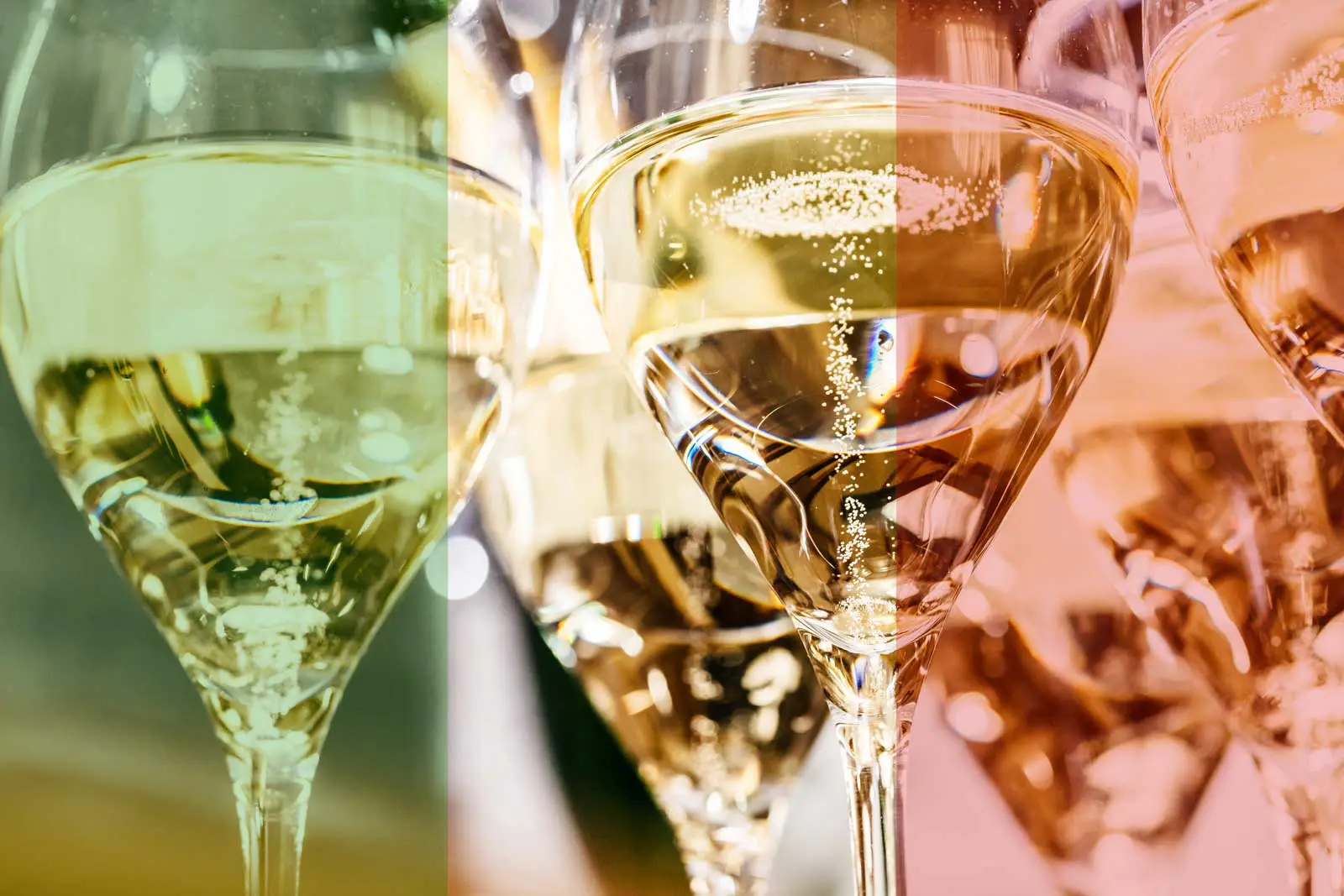
Quando si pensa all’eccellenza spumantistica italiana, le due denominazioni che subito arrivano alla mente sono Franciacorta e Trentodoc. Indubbiamente due punte di diamante ma il panorama tricolore spumeggiante non termina certo qui.

The emerging name is Alta Langa DOCG, which is hardly new, given that the first attempt at producing Metodo Classico in Italy was made in Canelli in 1865 by Cavalier Carlo Gancia, using Moscato grapes. What’s new is that producers have begun to increasingly believe in their resources and in the uniqueness of the terroir where their vineyards are located—the provinces of Asti, Alessandria, and Cuneo—only on the most suitable hills at altitudes no lower than 250 meters above sea level. Limestone soils, ideal for viticulture, and wide temperature ranges, lend elegance to Pinot Noir and Chardonnay.
Piedmont’s winemaking certainly needs no introduction, world-famous for its two red wines, Barolo and Barbaresco, and also appreciated for the lively aromas of Moscato d’Asti, not to mention the simple and immediate appeal of Barbera and Dolcetto. This region’s aptitude for producing excellence is also demonstrated in its Classic Method Spumante, where each year the vineyard area and the number of bottles on the market are increasing.
In a country like ours, where competition in sparkling wines is fierce—just think of Prosecco, Franciacorta, or Trentodoc, not to mention its French cousins—why should we favor the Alta Langa? What are the distinctive features that make it recognizable and therefore preferable to other regions?
Longevity is certainly key: these sparkling wines, in most cases, withstand very long aging on the lees and stand up well to time, even after disgorgement. Therefore, they have excellent structure and body. This is due in particular to Pinot Noir, which thrives in these limestone hills.
Another consideration is that, according to regulations, the Classic Method Alta Langa wines are the expression of a single harvest, so the bottles reflect the climate with its strengths, weaknesses, and peculiarities. This makes it more appealing to drink due to its variability, a concept disliked by the Anglo-Saxon population, for example, who prefer so-called cuvées, in which the cellar master strives to achieve the same result every year through blending.
Finally, other defining elements are volume, breadth of flavor, and aromatic richness. Focusing precisely on these aspects, I have always considered Alta Langa a gastronomic sparkling wine that demands structured food.

Another Italian region with a distinctly sparkling character is the Oltrepò Pavese, a winegrowing area shaped like a bunch of grapes—not surprisingly, I’d say—in the province of Pavia, south of the Po River. Great figures like Gianni Brera, Luigi Veronelli, and Mario Soldati wrote about this land, even about a wine that touches the soul.
The Oltrepò Pavese boasts simple and enjoyable products like the sparkling Bonarda, captivating whites like Riesling, and above all, a sparkling wine excellence, the Pinot Noir Metodo Classico DOCG. This is an ideal terroir for growing this grape variety, with subsoils composed of sandstone and, in some cases, chalk and limestone, rich in mineral salts.
The climate is mild and temperate, with wide temperature variations between day and night, breezy in summer and dry in winter. Its hilly terrain and the presence of rivers and streams make it particularly suitable for growing grapes. Sparkling wines have a long tradition, with the first rudimentary attempt dating back to 1865, starting with Pinot Noir vines selected in France. This wine has little else in common with our cousins across the Alps: different terroirs, richer soils, and a sunny climate. In the Oltrepò Pavese, the sparkling Pinot Noir becomes more fleshy and textured, and an excellent way to savor its authentic character is to try it in the Cruasé rosé version, a term derived from the words “cru” and “rosé.” This is not a trivial marketing concept, but rather a modern take on an ancient Lombard winemaking tradition in the Oltrepò Pavese, a genuine way to express the vinosity and richness of Pinot Noir.

Although the concept of fresh sparkling wines is associated with Northern Italy, Southern Italy is also witnessing the emergence, and in some cases, resurgence, of new areas that are increasingly attracting consumers. The first stop on our journey is Puglia, the Capitanata area, in the San Severo district. We are in the ancient Daunia region, framed by mountains and sloping down to the broad plains of the Tavoliere.
The plains and hills of Foggia, tempered by sea breezes, are rich in vineyards, producing mostly delicate wines. In recent years, thanks to the example of the D’Araprì winery, a movement has emerged around the Metodo Classico, particularly from Bombino Bianco. This grape variety is rarely heard of; it belongs to the Trebbiano family and has acquired some very curious nicknames since it became quite popular starting in the 1960s. The one it goes by in Romagna is famous: Pagadebit. Usually wines are very neutral in aromas but well-loaded with acidity, which is why they are able to express themselves fully in sparkling wine.

In the sparkling southern region, there’s also a territory unlike any other on the planet: a mountain, an active volcano over 3,000 meters high, located in scorching Sicily: Mount Etna. Here, we find extreme viticulture, with vineyards climbing the steep slopes, up to 1,000 meters above sea level.
The volcanic activity and the slopes of the land, mostly terraced, give a euphemism to the expression “heroic viticulture” but also a unique character in the glass. The typical red grape of the area, Nerello Mascalese, which produces, especially on the northern slope, the famous structured and mineral reds, also produces interesting Blanc de Noirs. Although the Metodo Classico typology was only introduced in 2011 into the Etna DOC regulations, the tradition began well before that. As early as the late 19th century, some enthusiasts dubbed the first Pinot Noir refermented wines produced by Baron Felice Spitaleri “Champagne Etna.” The native Nerello Mascalese wines, however, date back to the 1980s, produced by Cantina Murgo. This is a late-ripening grape variety, typically harvested in the second or third week of October, but for the sparkling wine style, the harvest usually takes place in late September, before full ripening. The resulting Metodo Classico has high acidity and mineral and sulfurous flavors and aromas that often prevail over the fruity and floral notes.

Another note on an old white wine experiencing a resurgence: the Aversa Asprinio DOC in Campania. Mario Soldati described it thus: “This great little wine smells of lemon, has a total, substantial dryness that you can’t imagine unless you taste it.” It has a distinctive acidity that makes it almost tart, hence the name Asprinio. The defining characteristic of the Aversa area is the volcanic soil, traceable to the Phlegraean Fields, composed of yellow and gray tuff, lapilli, pozzolana, and ash. This allows for a wine that lends itself successfully to sparkling wine production, whether using the Classic Method or Charmat method.
The traditional alberate training system, of Etruscan origin and unique in its kind, is unique and fascinating. It involves training vine shoots up tall poplars or elms, which act as supports, reaching heights of up to 20 meters, forming veritable vegetal barriers known as “vigne maritate” (married vines). High, narrow wooden ladders are used for harvesting, requiring skilled acrobatics from expert farmers, known locally as “spider men.” This system allows the grapes to retain a high level of acidity, which is essential for optimal sparkling wine production.

Finally, His Majesty Prosecco! A term that encompasses a whole new world and deserves further exploration, given that in our country it has become common to call anything that sparkles “prosecchino.” Starting with the technical definition, it is a Charmat Method sparkling wine, meaning it is refermented in an autoclave rather than in the bottle like the Classic Method, produced primarily in the Veneto region. In Prosecco, where the main grape is the aromatic Glera, the bubbles are generally very immediate, simple, flavorful, and versatile, suitable both as an aperitif and paired with simple seafood dishes or light appetizers.
There are three distinct settings associated with this sparkling wine. The first, a DOCG, is one of the most breathtaking wine-growing landscapes in Italy: the hills of Conegliano-Valdobbiadene, in the province of Treviso. Recently designated a UNESCO World Heritage Site, it is characterized by a succession of green, high, and steep south-facing hills. These sandy soils, formed by ancient seabeds, produce the most classic Prosecco, the highly aromatic one, with notes of Williams pear taking center stage. Near S. Pietro di Barbozza, we find an oenological gem: Cartizze, the cru of the Prosecco Superiore denomination, represented by a small, precious hill of just 100 hectares. Its beauty is breathtaking, its charm timeless. This is the richest, fullest, and most dense Prosecco.
Descending south of the Piave River, we find the second territory, Asolo, also a DOCG, the City of a Hundred Horizons, as Carducci called it, for its seemingly endless vista of hills. Here, the vines’ roots sink into highly minerally marl, with a typical red color, shaped by millennia of natural erosion. This is the most savory and structured Prosecco.
Finally, as a third type, there’s the controversial Prosecco DOC, whose vast production area extends to the plains, spanning five provinces in Veneto and four in Friuli. This is the sparkling wine of large quantities, growing every year, and is also widely used in mixology. Some might wonder what Friuli-Venezia Giulia has to do with Prosecco. Since Roman times, “Pucino” wine has existed, originating precisely from the Friuli-Trieste hills, where, even today, there is a town named Prosecco.
Valentino Tesi
Article published in the Corriere della Sera Guide “Bollicine Bere Bene per le Feste” (December 2022)


