
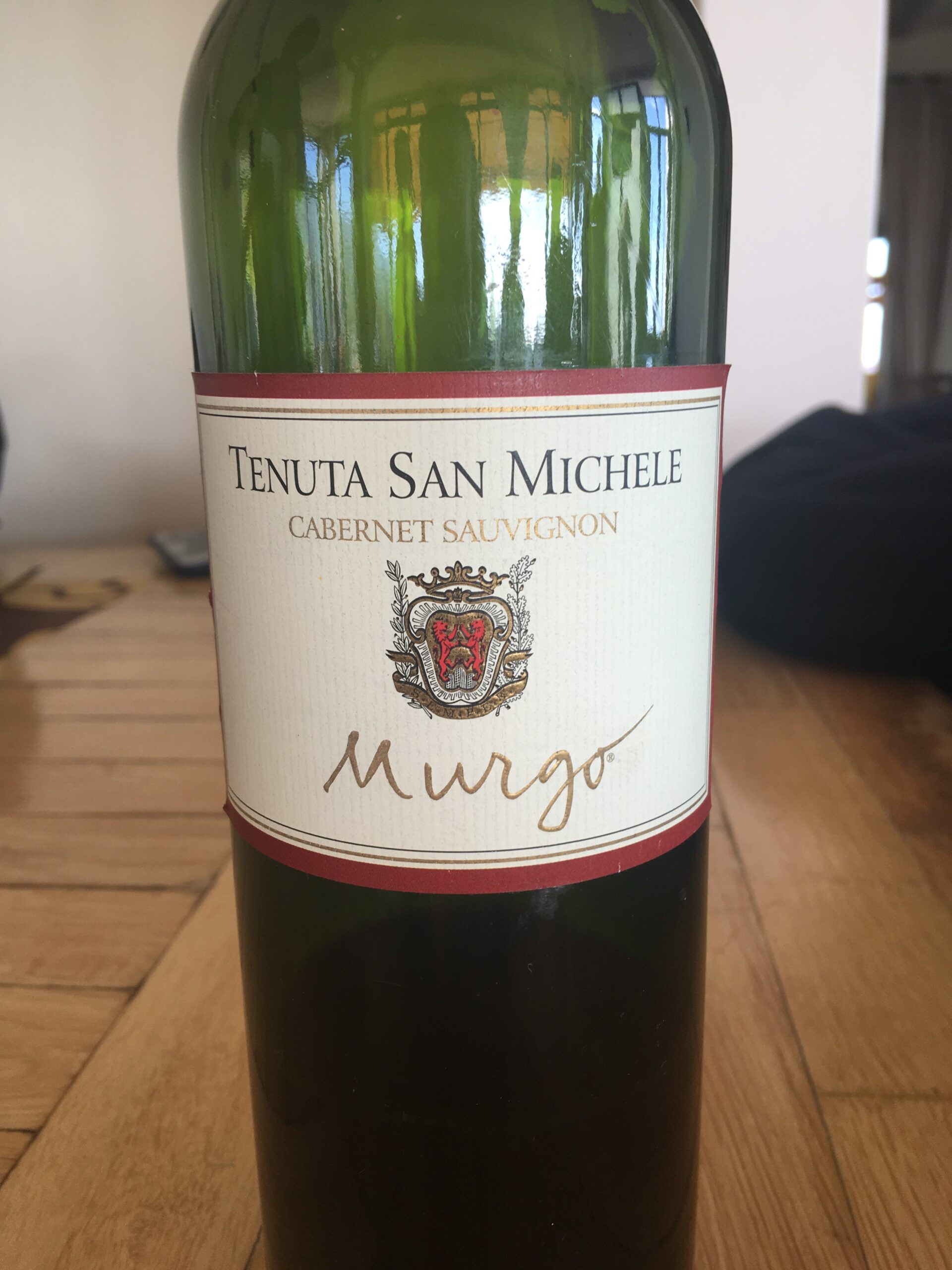
(Tasting January 18, 2019)

Murgo, we are located in San Michele, on the eastern slope of Mount Etna, 550 meters above sea level, just 5 kilometers as the crow flies from the Ionian Sea, which offers splendid views from the winery’s terraces, where you can also dine al fresco.
This winery stands out within the Mongibello region for its production of the classic method from Nerello Mascalese, the first to be produced on the slopes of the volcano in 1989. However, it is not the first example of a classic method from Etna; that distinction belongs to Castello di Solicchiata and its “Champagne dell’Etna” by Barone Spitaleri, a vintage from 1870, but based on Pinot Noir, not Nerello Mascalese.
The distinctive feature of the classic method is that they produce only vintage sparkling wines, expressions of a single harvest.

The soils, needless to say, are composed of fine-grained volcanic ash, black soils that stain the soles of your shoes as if you were walking on charcoal. The eastern slope is the rainiest of Etna’s slopes, with plenty of light and sea breezes, but also relatively high rainfall and humidity. The owners of Murgo have long fought to have San Michele recognized as an independent district because of its unique soil and climate characteristics, making it unique from the others. So unique that, thanks to its proximity to the sea, it is the only winery that produces the extremely rare Moscatello dell’Etna.
On Friday, January 18, 2019, I had the privilege of tasting a vertical tasting of a wine no longer in production, a true gem: an Etna Cabernet Sauvignon, Tenuta San Michele, made from the vineyard of the same name. The vines were planted in 1985, the first vintage bottled was 1991, and to date, it has been uprooted and replaced by other varieties.

Two interesting details: the best vintages tasted were those from the earliest years, and how, in this particular subzone of the volcano, seasonal variability significantly impacts the organoleptic profile of the wines from year to year.
Five vintages were tasted: 2002, 2001, 2000, 1999, and 1998. Here are my impressions:
1998: Bright, compact garnet with brick highlights. The nose has undergone a facelift, demonstrating vivacity despite its age. Ripe red fruit that has not yet reached advanced jammy notes. A clear smoky note, a territorial signature, yet one that does not overwhelm a noble vegetal note of walnut husk. The nose is subtle and very elegant.
The sip confirms the same sensations of integrity despite the years, with a persistent freshness on the palate, reminiscent of morello cherries in alcohol. Tannic energy that surprises with its vigor, a savory finish that lingers with hints of black olive brine. 91
1999: Intense and uniform garnet. The nose is marked by mineral notes of coal, garrigue with oregano in the foreground, cooked plum, juniper wood, moist leaves, and sweet pipe tobacco.
On the palate, silky tannins balance a delicate alcoholic note and a long finish of red plum jam seasoned with spicy nuances of clove and cinnamon. 88
2000: Vivid garnet without sagging. A decisive opening with a rusty note, almost like iron filings. Fruity nuances follow in the background. Hints of Latakia tobacco and dried laurel emerge in the background. The finish features a hint of coffee grounds.
The palate still retains acidic energy with a flavor of blood orange jelly, leaving a grainy tannin in the background that releases a bitter trail reminiscent of chinotto. 87
2001: Intense and deep garnet. Pungent and spicy nose, of star anise and mace. Wilting flowers with aromatic hints of lavender. A blend of ripe red and dark fruit, with blueberry and raspberry prominent. Undertones of eucalyptus, hints of smokiness, and a pleasant vegetal note of friggitello.
On the palate, around the tannic backbone, which releases toasted flavors of coffee and cocoa, a decisive caloric note unfolds along with a hint of salty savoryness. A bitter finish. 85
2002: A wine lacking in integrity, noticeable already in its color, dull and cloudy. A completely tertiary nose, mushrooms and truffle.
On the palate, only pungent acidity, light tannins, a stripped-back wine with a slightly bitter flavor. NOT ASSESSABLE

Valentino Tesi
(April 2023)


