
This is one of the questions I’m most frequently asked by wine enthusiasts, followed by “do you have to guess the wines blind?”
No, these aren’t competitions for wizards, but rather to showcase your skills and abilities as a wine communicator.
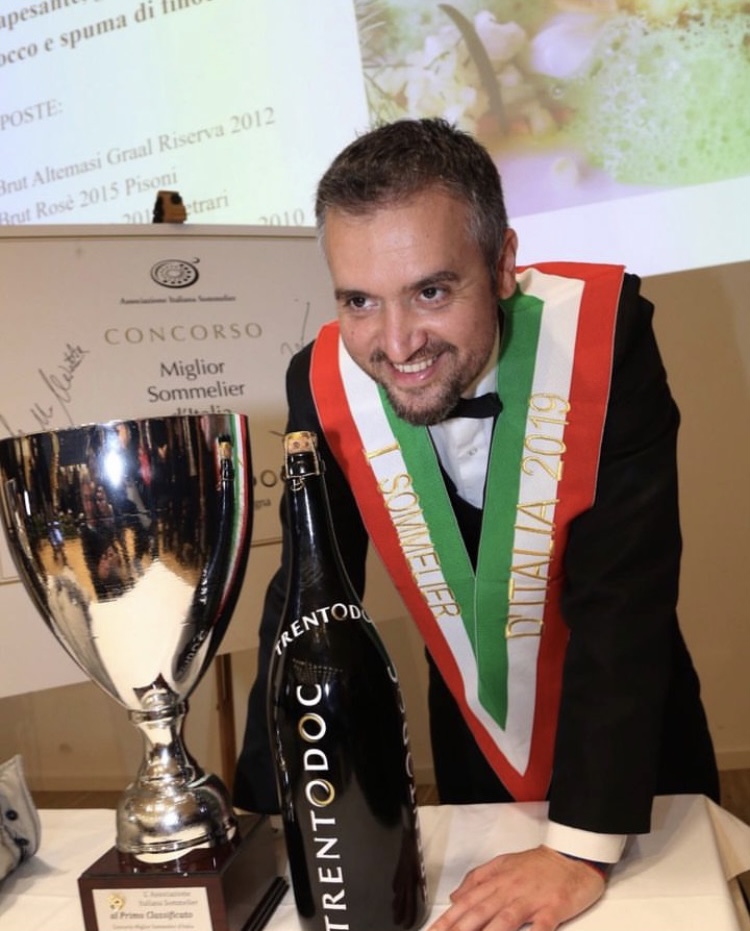
First of all, what I’ll write about concerns the world of AIS (Italian Sommelier Association) competitions, the most authoritative and representative sommelier school in our country. There are many events where you can challenge yourself and showcase your skills, some focusing on a single terroir or grape variety, such as the Master of Vermentino, Nebbiolo, and Chianti Classico, to name just a few. There are also those for the Best Sommelier of the Region. The pinnacle of all is the National Competition, “Best Sommelier of Italy Trentodoc Award,” which takes place annually. Once you win, you cannot participate again.
The exam typically begins with a written test, a questionnaire with dozens of questions, both open-ended and closed-ended, testing knowledge of oenology, winemaking legislation, national and international enography, beers, liqueurs, spirits, and more. This is followed by a food and wine pairing quiz, followed by a written blind tasting of two glasses of wine. Participants must provide notes on taste and aroma, using both technical and communicative language, and assign a score and comments on the wine’s evolution.

The top three scores from this test will then compete on stage in the grand final. Here, the bar is raised: they are required to blindly taste two wines—in the National Competition, the second in English or French—decant a red wine while describing it, pair wines from around the world with a varied menu, and be skilled at handling a bottle of Trentodoc Metodo Classico, serving two guests while explaining the region. Finally, they must convince the jury, both technical and journalistic, that they are affable communicators, explaining to the audience topics related to a famous wine, a wine personality, and even a wine region.
Of course, all this is limited to a total of 13 to 15 minutes. Easy, right?
The AIS organizes special schools, veritable training grounds, to prepare for these tests. The Tuscan school founded by Cristiano Cini is particularly noteworthy, having produced many national champions.
A sommelier competition isn’t just a competition against other colleagues; it’s first and foremost a challenge against oneself, to improve, to push one’s limits, to deepen one’s knowledge of wine, and to never stop learning.
Winning also offers the prestigious opportunity to become an ambassador for a territory, a region, and the Italian Sommelier Association as a whole. New horizons and unexpected career and job opportunities open up.

Il mio consiglio non può che essere partecipate! Sfidate voi stessi! Alcune volte vinci, tutte le altre impari.
Valentino Tesi
(luglio 2023)


